


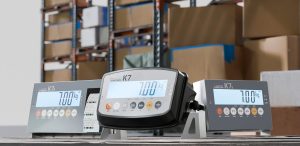
Industrial weighing indicators do more than just display scale readings; they are the control center of modern weighing systems. Carefully selected indicators ensure not only measurement accuracy but also efficiency, connectivity, and compliance with industry standards. From different housing materials to ingress protection and advanced features, choosing the right model can be challenging. Here’s what you need to know.
1. Housing Material: Durability and Environmental Compatibility
- Stainless Steel (SUS304 or SUS316)
The gold standard for harsh environments. The stainless steel indicator is corrosion-resistant, can withstand high-pressure washdowns, and meets food-grade hygiene requirements. They are ideal for food processing, pharmaceuticals and outdoor use.
- ABS Plastic
ABS indicators are lightweight and affordable, suitable for light to medium-duty applications in warehouses, retail stores and general industrial use. They are durable enough in dry, controlled environments but are not recommended for use in environments requiring frequent cleaning or exposure to chemicals.
- PBT (Polybutylene Terephthalate)
PBT is a high-performance engineering plastic that fills the gap between stainless steel and ABS. PBT offers superior toughness, impact resistance and chemical stability. It is often chosen for heavy-duty factory operations where cost control is important but durability cannot be compromised.
2. Dust and Waterproof
Industrial environments are rarely clean or dry. Indicators with Ingress Protection (IP) ratings ensure reliability in harsh conditions:
- IP65 : Protected against dust and low-pressure water jets. Suitable for light industrial use where the indicator may be occasionally exposed to splashes or dust.
- IP66 : Resistant to strong water jets from any direction. A common choice for outdoor or factory environments where heavy cleaning or rain exposure is expected.
- IP67: Provides comprehensive protection against dust and short-term water immersion. This rating is ideal for harsh environments, such as where the instrument may be washed down or accidentally immersed in water.
- IP68 & IP69K: Provides complete protection against dust and continuous immersion in water. Provides complete protection against dust and continuous immersion in water, and can withstand high-pressure and high-temperature water jets. This is particularly important in industries such as food processing or pharmaceuticals, where equipment must withstand frequent, intensive cleaning.
3. Application-Specific Design
- General Weighing Indicators
Suitable for platform scales, floor scales and pallet scales, it not only provides basic weight display, but also provides multiple functions such as tare, hold, animal weighing, and check weighing.
- Truck Scale Indicators
Designed for high-capacity weighing, they feature powerful signal processing capabilities, transaction memory, and are often integrated with printers or scale traffic lights.
- Control Indicators
Designed for manufacturing automation. They support functions such as batching, checkweighing, piece counting and relay outputs to control conveyors or filling machines.
4. Compliance and Certification
Accuracy alone is not enough; regulations and certifications are also necessary.
- OIML / NTEP Certification: Required for trade-approved applications where weight is used in commercial transactions.
- Local Standards: Some regions (e.g., EU, US, Middle East) require specific certifications for legal-for-trade or safety compliance.
Choosing a certified indicator ensures you meet customer requirements and regulatory obligations.
5. Connectivity and Integration
Modern industrial weighing indicators are no longer stand-alone devices. You’ll need to understand the features that connect your scale to a wider system:
- Data Interfaces: RS232, USB, Ethernet, Modbus, Wi-Fi or Bluetooth.
- Software Integration: Ability to link with ERP, MES, or livestock management software.
- Smart Functions: Onboard data logging, report generation, and compatibility with external devices like barcode scanners or label printers.
6. Practical Considerations
- Display Readability: LED for bright, high-contrast environments; LCD for detailed multi-line data.
- Power Supply: Rechargeable battery options for mobile applications; AC power for fixed installations.
- User Interface: Large buttons and intuitive menus reduce operator errors and training time.
Conclusion
Choosing the right industrial weighing indicator is about more than just price. You need to match the material to your environment, choose the correct ingress protection level, ensure it fits your application requirements, and verify compliance and connectivity.
Whether you need a stainless steel indicator for washdown conditions, a PBT housing for rugged factory use, or an ABS model for general industrial tasks, making the right choice ensures reliable performance, compliance and long-term value.